Experience & Engagement
Story Stream feed
Social / user-generated content storytelling
In one sentence
What it is
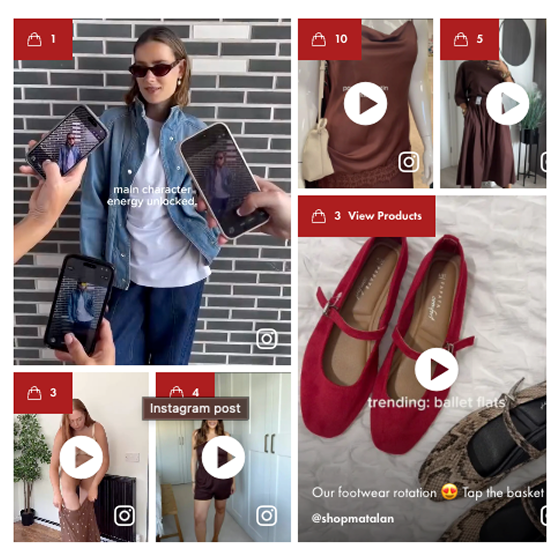
Story Stream brings social and user-generated content onto the site as a live, shoppable feed, so the proof that real people use and love the products sits next to the buy button.
How it works
What it does
Content is pulled from the brand's social channels and from customer posts, moderated, and published on site as a feed. Displayed on the home page, product pages, category pages or a dedicated social hub. Posts can be tagged to products so the feed is shoppable rather than decorative. Moderation and rights management sit with the brand, so nothing goes live unapproved, and the feed refreshes automatically as new content is published, which keeps key pages looking alive without anyone updating them.
The problem it solves
Why it matters
For the brand
Social content is created constantly and then abandoned in the feed, while the site looks static between campaigns. Meanwhile the most persuasive asset a brand owns, customers using the product, never reaches the point of decision.
For their customers
Product photography is understood to be idealised. Shoppers go looking for real-world evidence before they commit, and when the site doesn't provide it they leave to find it on social... where a competitor's ad is waiting.
For shoppers
How it benefits shoppers
- See the product on real people, in real settings, before committing.
- Buy directly from the post that convinced them, rather than searching for the item afterwards.
- Discover styling and usage ideas from the community, not just the brand's own art direction.
- Feel part of something, being featured is a reason to post, which is its own reward loop.
For the brand
How it benefits the brand
Social proof at the point of decision lifts conversion
PDP conversion rate
Key pages stay fresh with zero merchandising effort
Content refresh cost, return visits
Customer content extends the value of paid creative
Cost per asset, creative output volume
Keeps social-inspired shoppers on site instead of sending them away
Session depth, bounce rate
Encourages posting, which feeds organic reach
UGC volume, organic social reach
In practice
What it looks like
- 1
A shopper scrolls past the product description into a grid of real customer photos.
- 2
One shows the product being used in a way that answers their unspoken question about size or finish.
- 3
They tap the post; it opens with the tagged product and an add-to-basket alongside.
- 4
They add it without ever leaving the page they were already reading.
Where it lands hardest
Strong use cases by industry vertical
Health, wellness & nutrition
Progress posts and routine sharing are native to the category. Moderation matters more here, because health claims in customer captions carry regulatory risk.
Beauty & personal care
Exceptional fit. Real skin, real shades and real results are what shoppers actively search for, and the category generates UGC without being asked.
Food, drink & FMCG
Serving suggestions, recipes and occasions. Customer content supplies far more use cases than any brand shoot could cover.
Pet care
Among the most willing communities on the internet to post photos. Very high content volume for very little prompting.
Fashion & apparel
Fit and drape on real bodies is the single biggest purchase anxiety in the category, and the one thing studio photography can't resolve.
Luxury & premium lifestyle
Unfiltered UGC can undercut a luxury positioning; use tightly curated ambassador and editorial content rather than an open feed.
Common questions & objections
What clients usually ask
Why the platform version wins
Because the feed is tagged against the platform's own catalogue, a shoppable post uses live price and stock and the real basket, not a third-party overlay that opens a new context and loses the session.