Loyalty & Relationships
Marketing preferences & consent
Double opt-in, channel preferences, GDPR-aware
In one sentence
What it is
Double opt-in and channel preferences, built GDPR-aware from the start, so consent is captured properly and customers control exactly how they're contacted.
How it works
What it does
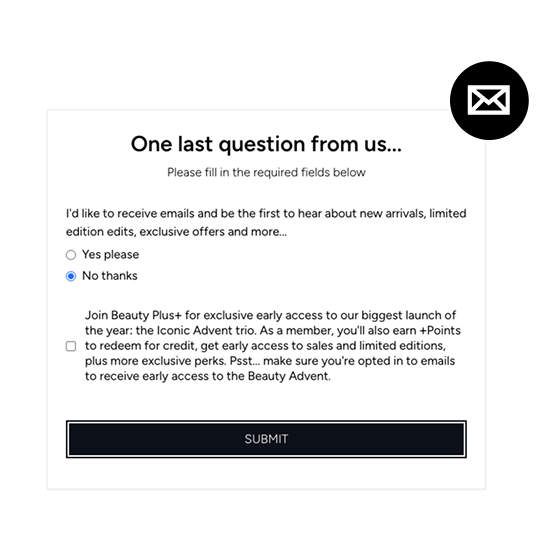
Customers set which channels they're happy to hear from — email, SMS, and others depending on brand configuration — and that consent is captured through a compliant double opt-in process rather than an assumed tick-box. Preferences are stored against the account and respected by every downstream communication system, so a customer who opts out of SMS but stays subscribed to email gets exactly that, consistently. Because it's standard and built with GDPR in mind from the outset, brands don't have to build their own consent logic or risk falling foul of regulation through a home-grown preference centre.
The problem it solves
Why it matters
For the brand
Consent management done badly is a genuine compliance and reputational risk — regulators take marketing consent seriously, and a poorly built preference system either annoys customers by ignoring their choices or exposes the brand to legal risk.
For their customers
They want a say in how a brand contacts them, and they're increasingly wary of retailers that keep emailing or texting after they've said no — it's one of the fastest ways to turn a customer into a detractor.
For shoppers
How it benefits shoppers
- Clear control over which channels contact them and which don't.
- Consent captured properly means fewer unwanted messages, not more.
- Preferences set once are respected consistently across every future communication.
- Confidence that their data is being handled in line with data protection expectations.
For the brand
How it benefits the brand
GDPR-aware consent capture reduces compliance and regulatory risk
Compliance risk exposure
Accurate channel preferences improve deliverability and engagement rates
Email/SMS engagement, unsubscribe rate
No bespoke consent system to build, audit or maintain
Engineering and compliance overhead
Clean, respected consent data protects sender reputation across channels
Deliverability, sender reputation score
In practice
What it looks like
- 1
A customer signs up and is asked, via double opt-in, to confirm they want email marketing.
- 2
They confirm via the verification email, and their consent is recorded against their account.
- 3
Later, they visit their preferences and opt out of SMS while staying subscribed to email.
- 4
Every subsequent campaign respects that split automatically, with no manual list management needed.
Where it lands hardest
Strong use cases by industry vertical
Health & nutrition
Particularly important where health-adjacent messaging needs to be sent only with clear, demonstrable consent.
Beauty & personal care
High-frequency marketing calendars make clean, respected preferences essential to avoid fatigue and unsubscribes.
Food, drink & FMCG
Applies equally; frequent promotional activity benefits from preference-based targeting rather than blanket sends.
Pet care
Same standard mechanism applies, with no category-specific nuance beyond general best practice.
Fashion & apparel
Seasonal campaign volume makes accurate channel preference data valuable for avoiding over-messaging during peak periods.
Luxury & premium
Respecting preferences precisely matters more here — over-contacting a premium customer undermines the exclusivity the brand is selling.
Common questions & objections
What clients usually ask
Why the platform version wins
Because consent is standard and GDPR-aware from the platform's foundations rather than bolted on per brand, there's no home-grown preference centre to audit for compliance gaps — it's built once, correctly, for everyone.