Loyalty & Relationships
Loyalty progress bar & tier display
Points-to-next-tier on PDP; tier widget
In one sentence
What it is
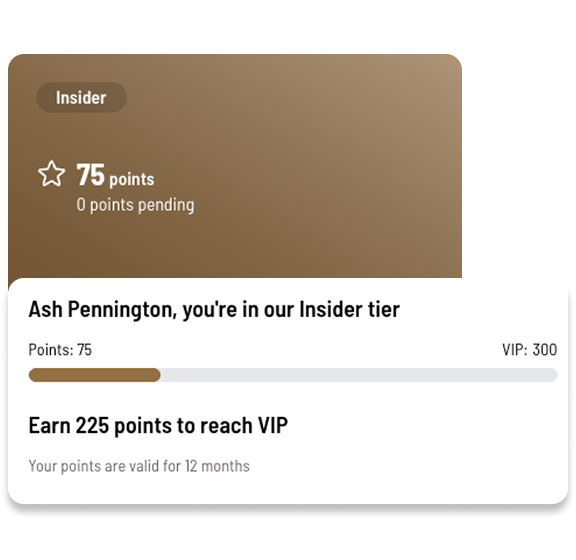
A visible points-to-next-tier bar on the product page and a tier widget in content turn loyalty status from something buried in an account page into something shoppers see while they're deciding to buy.
How it works
What it does
On product pages, a progress bar shows a shopper how many points this purchase would earn and how close it takes them to their next loyalty tier — a live, in-context nudge rather than something they'd have to go looking for. Alongside it, a tier widget can be placed in content (via Teepee) to promote tier benefits and status more broadly, on landing pages or campaign content. The brand controls where and how prominently these appear, since it's a toggle feature with a content layer on top, meaning the display can be turned on and its placement and messaging adjusted without an engineering request each time.
The problem it solves
Why it matters
For the brand
A loyalty programme that only shows its value in the account section barely changes behaviour at the moment that matters — the decision to buy. Without visibility on the page itself, points and tiers become an afterthought rather than a purchase driver.
For their customers
They don't think about loyalty status unless it's put in front of them — most shoppers have no idea how close they are to a reward or tier upgrade, so it never factors into whether they buy now or buy elsewhere.
For shoppers
How it benefits shoppers
- See exactly what this purchase earns before buying, not after.
- A visible sense of progress toward the next tier makes reaching it feel achievable, not abstract.
- Tier benefits are promoted where they're shopping, not hidden in an account menu.
- Makes loyalty membership feel like an active, ongoing relationship rather than a forgotten sign-up.
For the brand
How it benefits the brand
In-context visibility increases the behavioural pull of the loyalty programme
Loyalty engagement rate, points redemption rate
Progress-to-tier framing can lift basket size to cross a threshold
Average order value
Content-managed tier promotion needs no engineering effort per campaign
Marketing team autonomy
Reinforces loyalty membership at the highest-traffic point on the site, the product page
PDP-driven loyalty enrolment
In practice
What it looks like
- 1
A loyalty member views a product and sees the progress bar: 'Earn 40 points — 60 points from Gold tier.'
- 2
They add a second item to push themselves over the tier threshold.
- 3
The order confirms and their tier status updates in their account.
- 4
A tier widget on a campaign page reminds them what Gold unlocks, encouraging their next visit.
Where it lands hardest
Strong use cases by industry vertical
Health & nutrition
Strong fit — frequent purchasers respond well to visible, incremental progress toward a next tier.
Beauty & personal care
Especially effective given how established tiered loyalty already is in the category; visibility reinforces an expected mechanic.
Food, drink & FMCG
Works, though margins mean the point values shown need to be modest and realistic rather than headline-grabbing.
Pet care
Suits the predictable, recurring nature of pet care purchasing, where progress bars reinforce an already-forming habit.
Fashion & apparel
Useful, but with longer gaps between purchases the progress bar matters most around key seasonal shopping moments.
Luxury & premium
Honest note: a visible points counter can look transactional against a premium price point — favour the tier widget's status framing over a numeric progress bar.
Common questions & objections
What clients usually ask
Why the platform version wins
Because the progress bar and tier widget read live from the same loyalty data as the account and checkout, the number a shopper sees on the product page is always accurate — not a static promotional claim that risks being wrong by the time they check out.