Experience & Engagement
International overlay
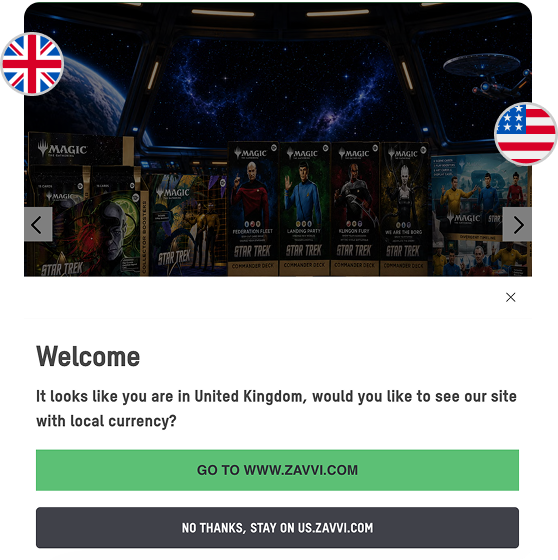
Geo-nudge to the local site; can redirect set countries to off-platform sites
In one sentence
What it is
The international overlay detects when a visitor has landed on the wrong regional site and offers to move them to the right one, or redirects specific countries straight to an off-platform site, so international traffic ends up somewhere it can actually buy.
How it works
What it does
When a shopper arrives from a country the site doesn't serve well, an overlay offers the correct destination: the local storefront, with local currency, pricing, delivery and language. Which countries see a nudge, which are redirected outright, and which are left alone is configured per brand, and the choice is remembered so returning visitors aren't asked again. It ships on by default because the cost of getting it wrong, international shoppers hitting prices and delivery promises that don't apply to them is immediate lost revenue.
The problem it solves
Why it matters
For the brand
International traffic arrives on whichever domain search or a shared link sent it to. Those visitors see the wrong currency, unavailable delivery and prices that exclude their duty and they bounce. The brand pays for the traffic, has the right storefront available, and still loses the order.
For their customers
Nothing kills confidence faster than a checkout that quotes an unfamiliar currency or refuses to ship. Most shoppers won't work out that a local version exists, they assume the brand doesn't serve their country.
For shoppers
How it benefits shoppers
- Land on the site that actually ships to them, with prices in their own currency.
- Avoid the checkout surprise of unavailable delivery or unexpected import charges.
- One tap to switch, and the choice is remembered on future visits.
- Can dismiss the nudge and stay where they are, it's an offer, not a lockout.
For the brand
How it benefits the brand
Misrouted international traffic is recovered instead of lost
International conversion rate
Fewer abandonments at the delivery and currency step
Checkout abandonment by market
Partner and distributor markets can be routed off-platform cleanly
Channel compliance, partner referrals
Local pricing and duty are shown before the shopper invests effort
Complaints, refused deliveries
Market routing is configured, not coded
Time to open or reroute a market
In practice
What it looks like
- 1
A shopper in Germany clicks a link to the UK site shared by a friend.
- 2
An overlay appears: continue on the UK site, or switch to the German store with EUR pricing and local delivery.
- 3
They switch; prices, delivery options and language all change with them.
- 4
On their next visit they go straight there, the preference is remembered and no overlay appears.
Where it lands hardest
Strong use cases by industry vertical
Health, wellness & nutrition
Critical. Ingredient restrictions and permitted claims vary by market, so routing to the compliant local storefront isn't just commercial — it's a regulatory safeguard.
Beauty & personal care
Formulation and shade availability differ by region, and cross-border beauty demand is high, misrouted traffic here is expensive.
Food, drink & FMCG
Shipping restrictions and short shelf life make wrong-market landings almost always a dead end; redirecting early saves the session.
Pet care
Moderate. Cross-border demand is lower, but bulky food shipping economics make sending shoppers to the local site essential when it exists.
Fashion & apparel
Sizing conventions and duty thresholds differ sharply by region; landing on the local site prevents both the wrong size and the surprise customs bill.
Luxury & premium lifestyle
Distribution agreements often restrict which markets can be served directly, the hard-redirect option is how those obligations are honoured without losing the customer.
Common questions & objections
What clients usually ask
Why the platform version wins
This isn't a geo-redirect script bolted on top. It's tied to the platform's own market configuration, so the destination it offers has the correct currency, tax treatment, duty handling and delivery promise already applied, the switch lands the shopper somewhere that genuinely works.