Checkout & Payments
Fraud screening
Risk checks in the checkout flow
In one sentence
What it is
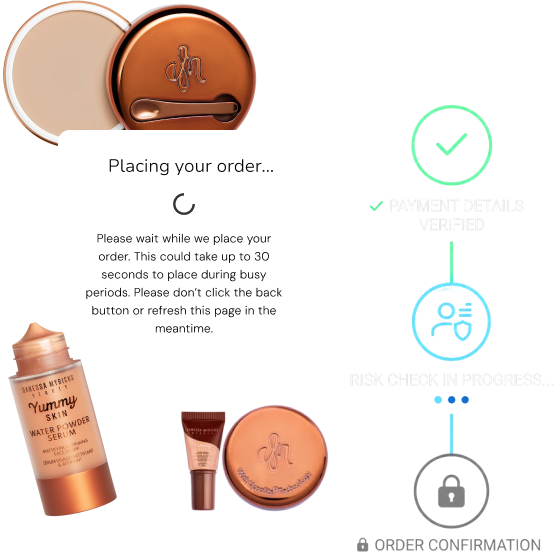
Fraud screening runs automated risk checks on every order during checkout, catching suspicious transactions before they complete, so the brand isn't left absorbing the cost of fraudulent orders after the fact.
How it works
What it does
As an order moves through checkout, it's assessed against a set of risk signals — patterns associated with stolen card use, mismatched delivery and billing details, unusual order characteristics — and scored for risk before payment is finalised. High-risk orders can be blocked, held for review, or challenged with additional verification, depending on how the brand's risk tolerance is configured. It runs as standard within the checkout flow alongside payment and tax, so every order gets the same consistent screening rather than fraud checks being a manual, after-the-fact process.
The problem it solves
Why it matters
For the brand
Fraudulent orders cost twice: the goods are lost, and the payment is charged back, often with an additional processing penalty from the payment provider. Without automated screening, catching fraud relies on a team spotting patterns manually, by which time the stock has usually already shipped.
For their customers
Genuine customers ultimately bear the cost of unchecked fraud, in higher prices and in the reputational damage a brand suffers when it's known for being an easy fraud target — and a badly tuned system can also wrongly block a genuine order, which is its own source of frustration.
For shoppers
How it benefits shoppers
- Genuine orders are processed smoothly, without added friction from manual review delays.
- Lower fraud losses across the brand help keep prices and policies fair for everyone.
- Reduced risk that their own card details are exploited via the brand's checkout.
- Faster resolution when an order is flagged, since checks happen automatically rather than sitting in a manual queue.
For the brand
How it benefits the brand
Reduces chargeback losses and the associated processing penalties
Chargeback rate, fraud loss as % of revenue
Screens every order automatically at scale, not just ones a team happens to notice
Coverage rate, orders screened
Runs inside the standard checkout flow without adding a separate manual step
Checkout completion time
Configurable risk tolerance balances fraud prevention against false declines
False decline rate
In practice
What it looks like
- 1
A shopper completes checkout with a delivery address that doesn't match their billing address and a shipping speed typical of resale fraud.
- 2
The order is automatically scored against known risk signals during payment processing.
- 3
It's flagged as high-risk and held for review rather than confirmed and dispatched immediately.
- 4
The order is either verified and released, or cancelled before stock and shipping cost are committed.
Where it lands hardest
Strong use cases by industry vertical
Health & nutrition
Relevant given the resale value of some supplement lines, which can attract card-testing and reshipping fraud.
Beauty & personal care
High resale value on prestige lines makes this category a frequent fraud target.
Food, drink & FMCG
Lower average fraud exposure given typical basket values, though bulk or high-value alcohol orders carry more risk.
Pet care
Moderate exposure, generally lower resale appeal than beauty or fashion.
Fashion & apparel
High exposure — resale value and frequent card-testing fraud make this one of the categories most affected.
Luxury & premium
The highest exposure of all — high-value goods with strong resale demand make this vertical the most attractive target for organised fraud.
Common questions & objections
What clients usually ask
Why the platform version wins
Because screening happens inside the same checkout pass as payment and tax, every order gets consistent, automated risk assessment before stock ships — not a manual fraud queue reviewed after the fact, by which point the cost is already committed.