Checkout & Payments
Discount types
Fixed, percentage, tiered (spend/quantity), RRP-based, free-gift, sample
In one sentence
What it is
A full set of discount mechanics — fixed amount, percentage, tiered by spend or quantity, RRP-based, free gift and sample — gives trading teams the range of tools needed to run a real promotional calendar, not just a single blunt discount code.
How it works
What it does
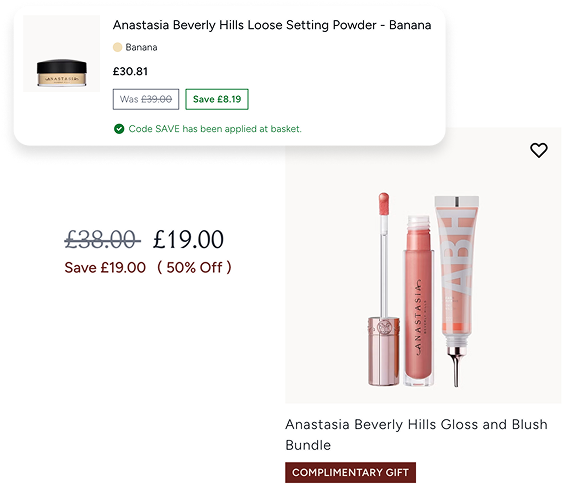
Each discount type is configured through the offers tooling and can be scoped to specific products, customer segments or time windows. Fixed and percentage discounts cover straightforward promotions; tiered mechanics reward higher spend or quantity with a bigger saving, encouraging larger baskets; RRP-based discounts calculate a saving against a reference price for clear before-and-after messaging; and free-gift and sample mechanics add a qualifying product rather than reducing price. All mechanics resolve through the same basket and pricing engine, so they can be combined, restricted and scheduled without any of them needing a separate calculation system.
The problem it solves
Why it matters
For the brand
A trading calendar needs different mechanics for different moments — a flash sale needs a simple percentage off, a loyalty push needs tiered spend rewards, clearance needs RRP-based messaging — and if the platform only supports one blunt mechanic, the team either can't run the campaign they need or has to force it into the wrong shape.
For their customers
A discount that doesn't map to how the shopper thinks about the deal — a vague percentage off an unclear reference price, or a threshold that isn't explained — makes the saving feel less trustworthy than it should, even when the numbers are genuine.
For shoppers
How it benefits shoppers
- See discounts presented in the clearest way for the type of deal — a clear percentage, a before-and-after RRP comparison, or a free gift.
- Understand tiered offers clearly, so spending more to reach the next tier is an informed choice.
- Trust that RRP-based savings are calculated against a genuine reference price.
- Benefit from free-gift and sample mechanics that add value rather than just lowering price.
For the brand
How it benefits the brand
Supports a full trading calendar without forcing every campaign into one mechanic
Number of distinct promotion types run per year
Tiered mechanics deliberately lift basket size rather than just reducing margin
Average order value
RRP-based discounts support clearance and markdown trading with clear customer messaging
Clearance sell-through rate
All mechanics are configured by the trading team, not built by engineering per campaign
Time to launch a new promotion
Combinable and schedulable mechanics protect margin versus a single blunt sitewide code
Discount depth, gross margin
In practice
What it looks like
- 1
A trading team plans a peak sales event needing three mechanics: a flash percentage discount, a spend-tiered reward, and RRP-based clearance messaging on old stock.
- 2
All three are configured through the same offers tooling, scoped to different product ranges and dates.
- 3
A shopper sees an RRP-based saving on a clearance item, and separately unlocks a tier discount by adding a second product.
- 4
Both discounts resolve correctly against the same basket total, with no manual reconciliation needed.
Where it lands hardest
Strong use cases by industry vertical
Health & nutrition
Tiered and quantity mechanics suit multi-month stock-building well, pairing naturally with subscription discounts.
Beauty & personal care
Free-gift and sample mechanics are the category's defining promotional lever, more than pure price discounting.
Food, drink & FMCG
Quantity-based multibuy mechanics mirror long-established in-store merchandising patterns for the category.
Pet care
Spend and quantity tiers work well on bulky, heavy food orders where a bigger basket also improves shipping economics.
Fashion & apparel
The most promotion-intensive category — RRP-based markdown and scheduled percentage discounts are core to how the category trades.
Luxury & premium
Use with care — public percentage discounting can damage a premium position; scoped, restricted mechanics for VIP or private audiences suit the category better.
Common questions & objections
What clients usually ask
Why the platform version wins
Because every discount type resolves through the same basket and pricing engine, a trading team can run several mechanics at once — a tiered offer, an RRP markdown and a free gift — and the shopper sees one coherent, correctly calculated total rather than a stack of independent discount tools fighting over the same order.