Experience & Engagement
Content & storytelling widgets (40+)
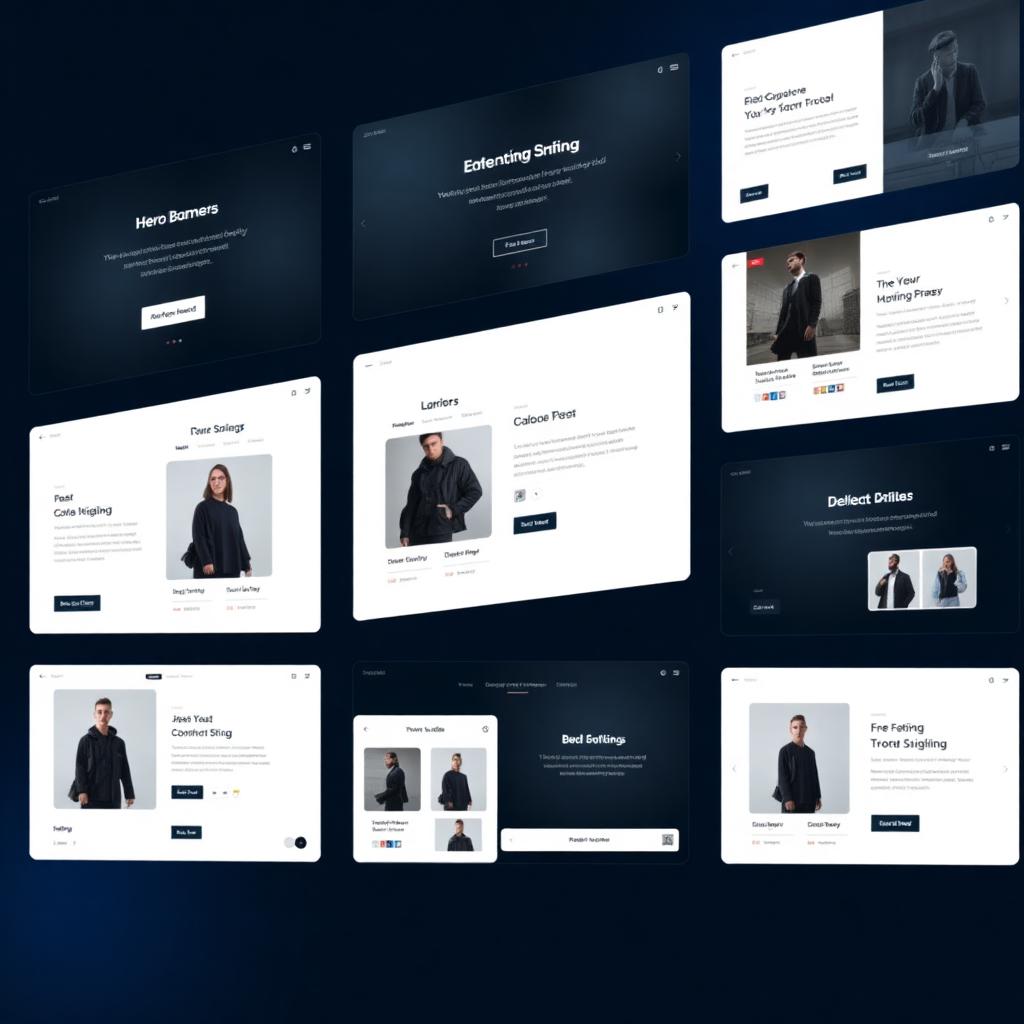
Hero/video banners, editorial layouts, image card sets, CTAs, dividers
In one sentence
What it is
A library of 40+ ready-made content widgets — hero and video banners, editorial layouts, image card sets, CTAs and dividers — that lets a brand team build and publish rich storytelling pages themselves, without a developer and without a release.
How it works
What it does
Every page on the site is assembled from widgets. A merchandiser picks a widget, drops in copy, imagery and links, arranges the order, and publishes. Because the widgets are built and maintained centrally, each one is already responsive, accessible, performance-budgeted and consistent with the brand's design tokens — so a marketer cannot accidentally ship a broken or slow page. The same widget set powers home pages, campaign landing pages, category pages, brand hubs and editorial content, which means one skill set covers the whole site. New widgets are added to the library over time and become available to every brand on the platform.
The problem it solves
Why it matters
For the brand
Campaign pages are usually the bottleneck between a marketing idea and revenue. When every hero, landing page or seasonal edit needs a developer ticket, the calendar is set by engineering capacity rather than by the market — and agency build costs recur every campaign. Widgets move page building to the people who own the campaign.
For their customers
Shoppers arriving from an ad or a social post expect the site to continue the story they were just told. A generic grid of products with no context breaks that thread, so they bounce back to the feed rather than browse.
For shoppers
How it benefits shoppers
- Campaign pages that actually look like the campaign — the story continues from the ad instead of dead-ending in a product grid.
- Content that behaves properly on a phone: layouts are responsive by construction, not retrofitted.
- Faster pages, because the widgets carry a shared performance budget rather than bespoke one-off code.
- Consistent, predictable navigation and interaction patterns across every page of the site.
For the brand
How it benefits the brand
Campaign pages go live in hours, not sprints
Time to publish / campaigns shipped per quarter
No developer or agency cost per landing page
Cost per campaign, engineering hours reclaimed
Storytelling pages convert better than bare listings
Landing page conversion rate, bounce rate
Brand consistency enforced by the component set
Design QA time, brand compliance
New widgets arrive without a re-platform
Feature adoption without project cost
In practice
What it looks like
- 1
A merchandiser opens the page builder and starts a new landing page for a seasonal launch.
- 2
They add a video hero, an editorial two-column block, a set of image cards linking to three categories, and a CTA band.
- 3
Copy, imagery and links are filled in inline; the preview shows desktop and mobile side by side.
- 4
They schedule it to publish at midnight — no ticket raised, no release window needed.
Where it lands hardest
Strong use cases by industry vertical
Health, wellness & nutrition
Education sells the product: goal-based guides, ingredient explainers and regimen builders need long-form layouts, not product grids.
Beauty & personal care
The strongest fit. Launch pages, routine builders and shade stories run on a constant campaign cadence that would swamp any developer queue.
Food, drink & FMCG
Recipes, provenance stories and seasonal gifting hubs — high content volume, low complexity per page, exactly what a widget library is for.
Pet care
Life-stage and breed guidance pages build trust and feed organic search; owners research before they buy.
Fashion & apparel
Lookbooks, drops and edits live and die on imagery and pace — the ability to publish the same day the campaign lands is the whole point.
Luxury & premium lifestyle
Works, with a caveat: luxury tolerates less template feel, so expect to invest in bespoke styling within the widget set rather than using it out of the box.
Common questions & objections
What clients usually ask
Why the platform version wins
The difference from a bolt-on CMS is that these widgets are commerce-native: they read live product, price and stock data from the same platform, so a story page is also a shoppable page — no content-to-catalogue sync, no drifting prices.