Checkout & Payments
Buy now pay later messaging
BNPL messaging on the product page
In one sentence
What it is
Buy now pay later messaging shows a shopper on the product page that a purchase can be split into instalments before they've even added it to the basket, so affordability is visible at the moment it matters most: the decision to buy.
How it works
What it does
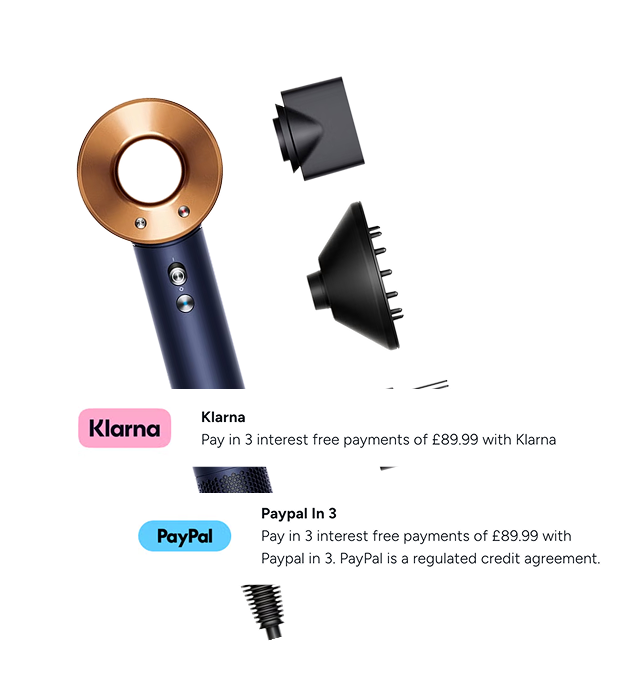
Where a BNPL provider is enabled for the market, the product page shows a short messaging line — for example, the price broken into instalments — so the shopper sees the affordable framing of the purchase without needing to reach checkout first. It draws live from the same price shown elsewhere on the page, so the instalment breakdown is always correct, and it's shown only where the relevant BNPL provider is actually available in that market. The brand controls whether the messaging appears and its placement on the page; the underlying payment method itself is a separate integration.
The problem it solves
Why it matters
For the brand
If a shopper doesn't know a purchase can be paid in instalments until checkout, price sensitivity has already shaped their decision on the product page — some abandon before ever discovering the option that would have made them comfortable buying.
For their customers
Looking at a higher-value item and mentally ruling it out as too expensive, only to discover at checkout it could have been split into manageable instalments, comes too late to change the decision they'd already made.
For shoppers
How it benefits shoppers
- See affordability framing at the point of deciding to buy, not after committing to checkout.
- Understand exactly what each instalment would be, in the same place as the full price.
- Feel confident considering higher-value items without ruling them out early.
- Only see the messaging where the payment option is actually available to them.
For the brand
How it benefits the brand
Surfaces affordability earlier in the journey, before abandonment on price
Product page conversion rate
Raises average order value where instalments make larger baskets feel manageable
Average order value
Reinforces the value of BNPL provider relationships already in place
BNPL attach rate at checkout
Configurable placement and visibility per market, avoiding messaging where the provider isn't live
Messaging accuracy, compliance
In practice
What it looks like
- 1
A shopper views a higher-value item and sees a line under the price reading 'or 4 instalments of £X'.
- 2
That framing reassures them the purchase is manageable, and they add it to the basket.
- 3
At checkout, the same BNPL provider appears as a payment option.
- 4
They complete the purchase using instalments, exactly as messaged on the product page.
Where it lands hardest
Strong use cases by industry vertical
Health & nutrition
Limited relevance at typical basket values, though useful on higher-value multi-month bundles.
Beauty & personal care
Relevant for higher-value tools and gift sets, less so for everyday lower-value basics.
Food, drink & FMCG
Weak fit generally — typical basket values are too low for instalment framing to be meaningful.
Pet care
Useful for higher-value bulk food orders and equipment, less relevant for small accessory purchases.
Fashion & apparel
One of the strongest fits — instalment messaging is core to how the category already shops and converts.
Luxury & premium
Genuinely useful for affordability on high-ticket items, though the branding of the BNPL provider needs to be presented in a way that doesn't undercut the premium tone.
Common questions & objections
What clients usually ask
Why the platform version wins
Because the messaging pulls from the same live price and the same enabled providers as checkout, what a shopper is promised on the product page is guaranteed to be available when they get there — not a generic instalment estimate that has to be caveated at the final step.